
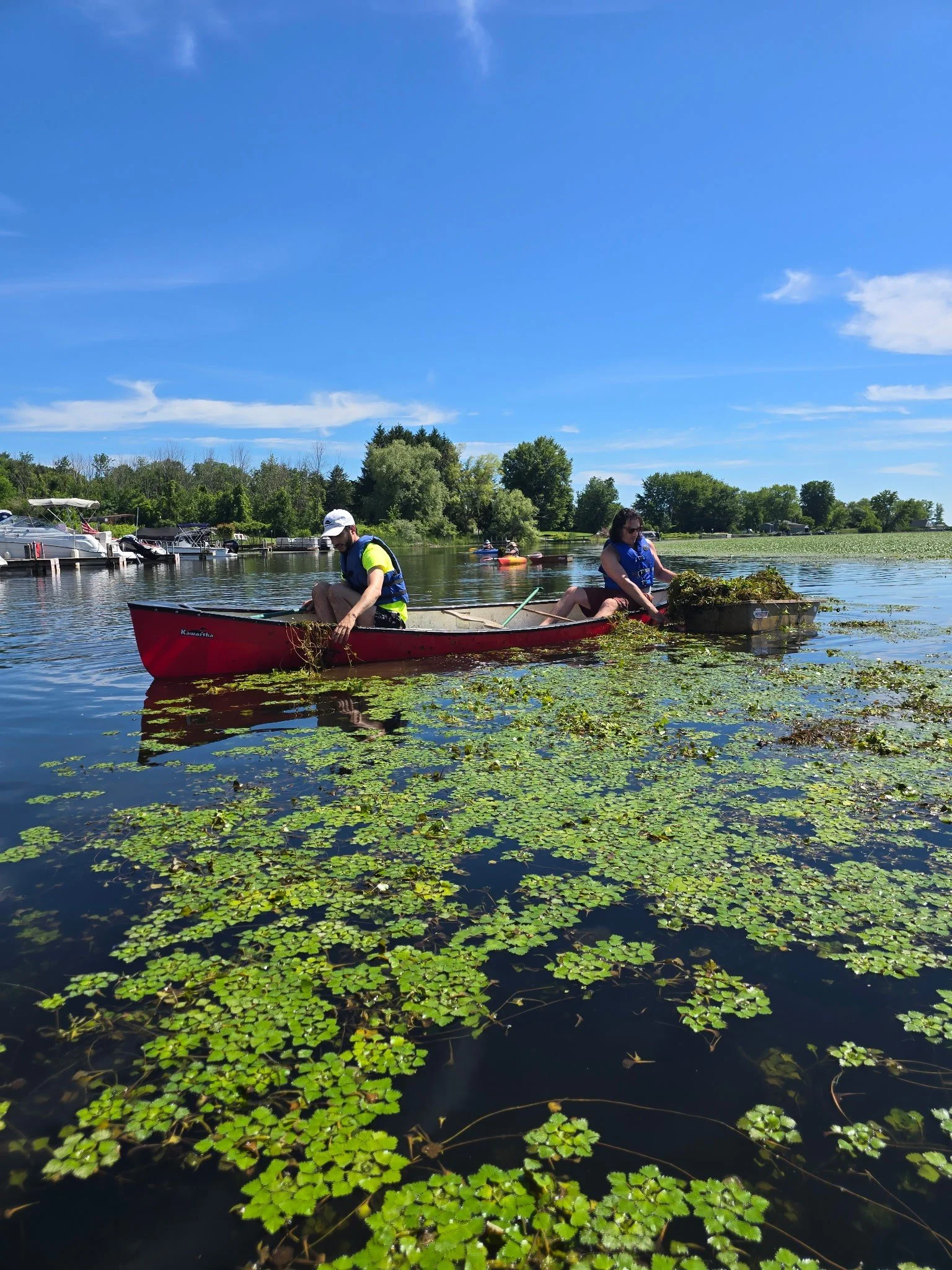
The Town of Greece set out this past summer to control the spread of the non-native, invasive water chestnut (Trapa natans) in the ponds and creeks of Braddock Bay. What seemed like a large undertaking at the start of the season ended up being a massive community success.
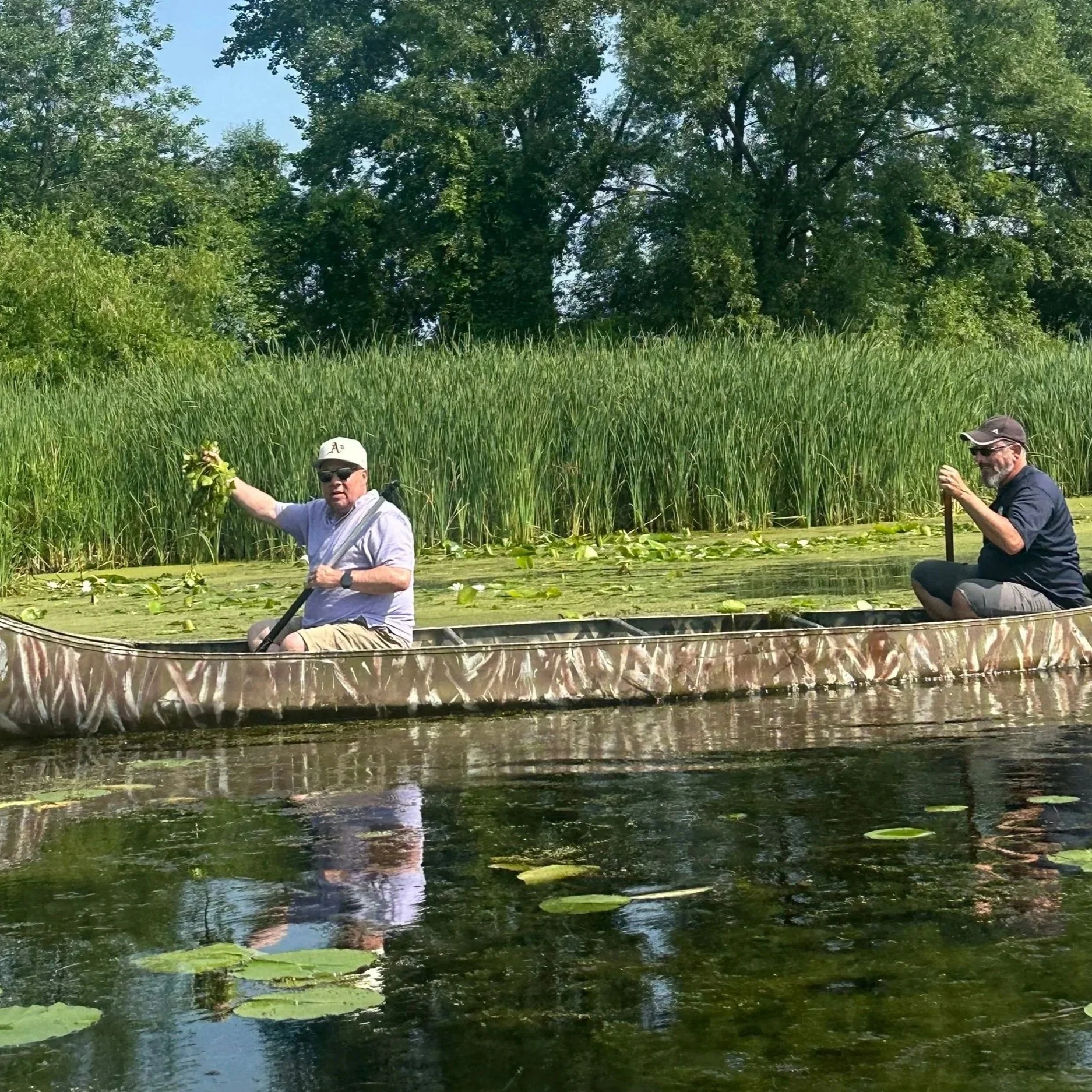
Town of Greece Supervisor Jeff McCann holds up water chestnut he has pulled. Photo provided by the Town of Greece.
“This summer’s water chestnut removal effort is a perfect example of what our community can accomplish when residents, non-profit organizations, and government work together to protect the natural resources we all enjoy,” said Greece Town Supervisor Jeff McCann.
“Greece’s waterways are a public treasure, and the fact that so many volunteers came together for nine hand-pull events to remove 7.5 tons of invasive plant material speaks to how much our residents care about their health. I want to thank Mat Morris and everyone who gave their time this season.”
Success in Numbers:
9 community hand-pull events
66 volunteers
261 service hours
7.5 TONS of water chestnut removed (14,923 lbs.)
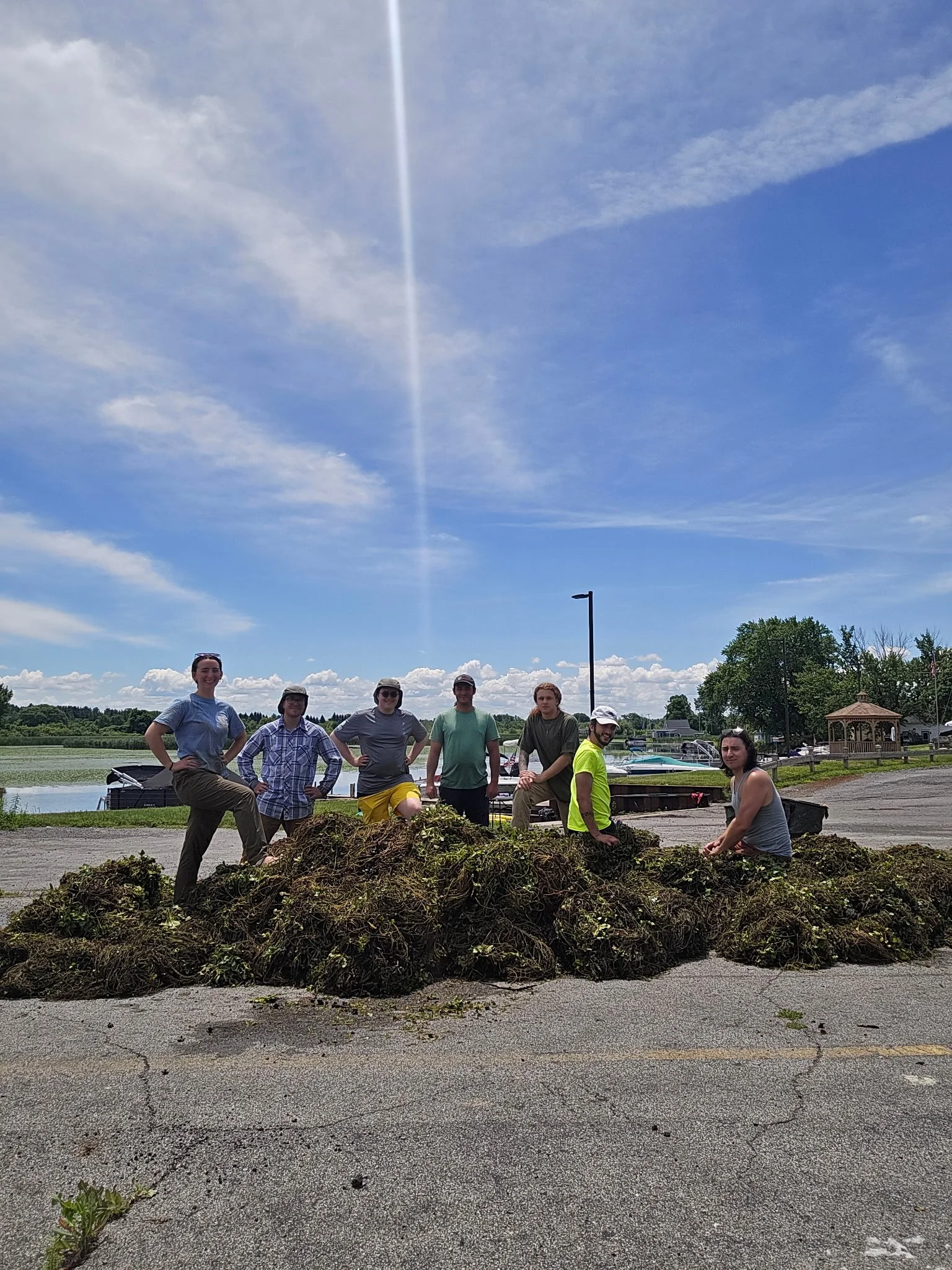
Photo of volunteers provided by the Town of Greece.
These aquatic plants form dense, mat-like layers that outcompete and push out native plants, disrupting local fish and wildlife populations. They also impact recreational water activities making it impossible in some areas to boat and even fish. This summer, the Town called on regional partners, including Genesee Land Trust, to come together to host volunteer hand-pull events throughout Braddock Bay to protect one of the most important habitat areas in the state.
Hand-pulling can be an effective way to remove water chestnut populations and prevent them from spreading further. From kayaks and canoes, volunteers pull out individual plants (including the seed) and transport them back to shore for removal. In areas where there weren't dense mats, volunteers carefully looked for individual plants, helping reduce the spread of the plant to other ponds and wetlands.
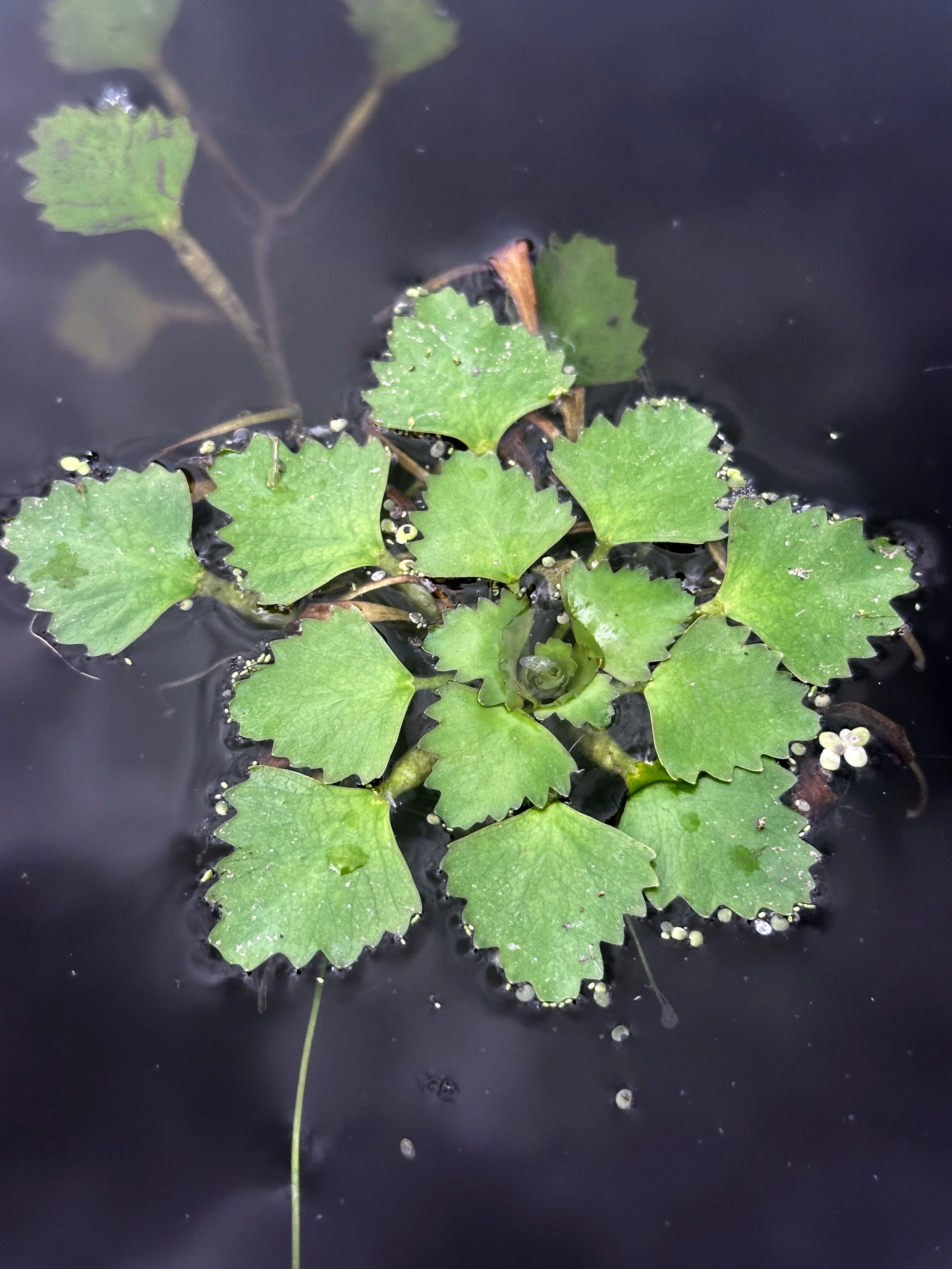
Photo by Mat Morris.
The water chestnut is native to Eurasia and Africa and was introduced in the United States in the mid 19th century as an ornamental plant. It turned out that the plant quickly colonizes freshwater lakes, ponds, and slow-moving streams and rivers. Its stems reach 12-15 feet through the water, anchored by its seeds or nuts and fine roots – which can make it difficult to pull them out.
What is most concerning about the plant is that the nut it produces, which is sharply barbed and protects its seeds inside, which remain viable for up to 12 years.
“Aquatic invasive plants like the water chestnut are difficult to manage because of how easily they’re transported—flowing freely in the water throughout our wetlands or as aquatic hitchhikers on our boats” shared Kevin Farrell, Senior Director of Conservation at Genesee Land Trust.
The good news is that this year partners made a big impact. 7.5 tons of water chestnut were hand-pulled from Braddock Bay this summer, including along Genesee Land Trust’s Salmon Creek Wetlands, and other Town and New York State Department of Environmental Conservation (NYSDEC) conserved lands. The regional partners that helped make this project possible were NYSDEC, Monroe County Soil & Water Conservation District, Finger Lakes Partnership for Regional Invasive Species Management, Genesee Valley Audubon Society, SUNY Brockport, and Seneca Park Zoo.
If you are interested in volunteering for removal events next year you can reach out to Mat Morris at MMorris@greeceny.gov, or sign up for water chestnut updates at: www.greeceny.gov/departments/plec/water-chestnut/